

Smart AI Marketing: Enhance Without Losing Human Touch
AI, Marketing Tips
Smart Ways to Use AI in Your Marketing (Without Losing the Human Touch)
Artificial intelligence is no longer a futuristic buzzword. It is a practical tool that can help you understand your audience, save time, and create sharper marketing campaigns—if you know how to use it well.
What AI Really Means for Everyday Marketing
In marketing, AI is best thought of as a smart assistant, not a replacement for your strategy or creativity. It can analyse large amounts of data, spot patterns you would miss, and handle repetitive tasks at speed. Your job is to provide direction, judgement, and brand voice while AI does the heavy lifting in the background.
Used well, AI helps you answer three core marketing questions: Who should you talk to, what should you say, and when is the best time to say it. The following marketing tips focus on practical ways to use AI to improve each of these areas without overwhelming your team or your budget.
Tip 1: Use AI to Understand Your Audience Better
Start by letting AI analyse the data you already have—website analytics, email performance, social media engagement, and customer feedback. Many marketing platforms now include built-in AI features that highlight which segments are most engaged, which channels drive conversions, and which messages fall flat. This turns raw numbers into clear signals about what your audience actually cares about.
Look for AI-powered “insights” or “recommendations” tabs in your email, CRM, or analytics tools.
Use these insights to refine your buyer personas and content topics.
Tip 2: Let AI Help with Ideas, Then Edit Like a Pro
AI writing tools are excellent for beating blank-page syndrome. You can use them to brainstorm blog topics, subject lines, ad variations, or social captions in seconds. The key is to treat AI as a first draft partner, not as your final voice. Feed it clear prompts about your audience, offer, and tone, then rewrite and polish the output so it sounds like your brand, not a robot.
Ask AI for five headline options, then combine the best elements into one strong version.
Use AI to tailor the same core message to different platforms and audiences.
Tip 3: Personalise at Scale with AI Segmentation
Personalisation is powerful, but manually tailoring messages for every segment is impossible. AI can group customers based on behaviour, interests, and likelihood to buy, then help you send more relevant offers. Even simple changes—like adjusting product recommendations or subject lines by segment—can lift engagement and revenue without adding much extra work.
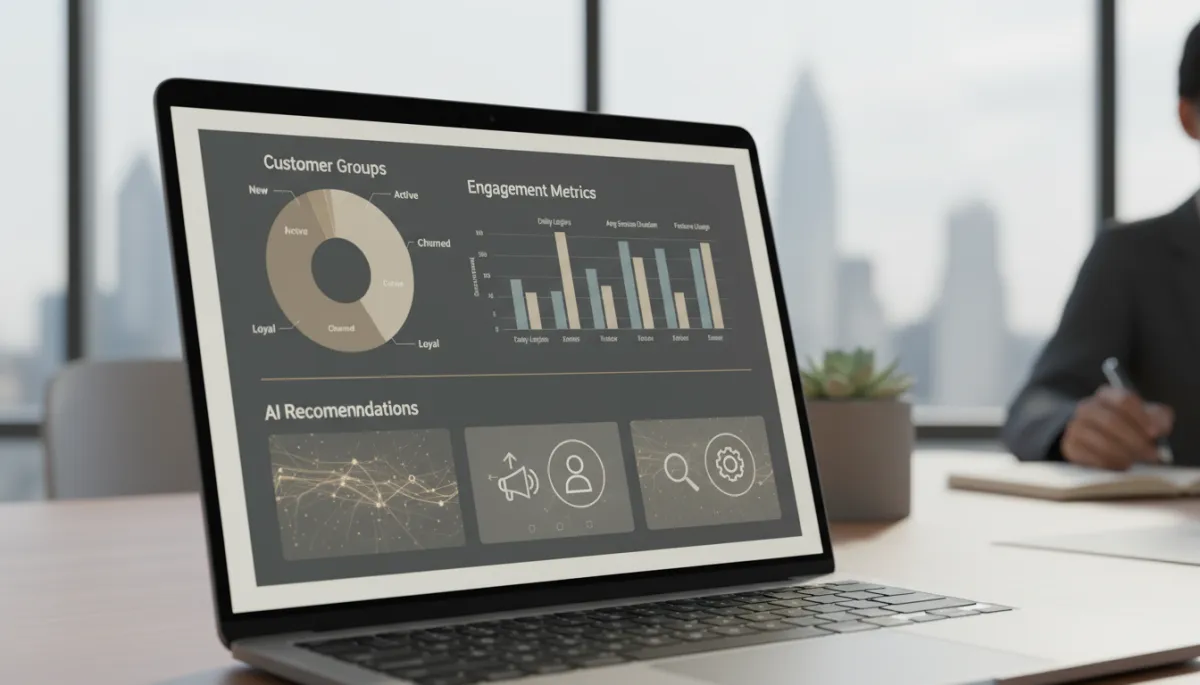
AI-driven segmentation often reveals hidden customer groups you can serve with tailored campaigns.
Tip 4: Optimise Timing and Channels Automatically
Many tools now use AI to decide the best time to send emails, post on social, or show ads. Instead of guessing, you can let the system learn when each contact is most likely to open, click, or convert. Over time, this fine-tuning can significantly improve results from the same content and budget.
Enable “send time optimisation” or similar features where available.
Compare performance before and after to prove the value to your team.
Tip 5: Keep the Human Element Front and Centre
The strongest AI marketing strategies remember that customers are human. They respond to empathy, clarity, and trust—not just clever algorithms. Always review AI-generated content for accuracy, tone, and sensitivity. Share real stories, show your team, and make it easy for people to reach a human when they need help. AI should support relationships, not replace them.
Bringing It All Together
AI and marketing work best together when you start small, stay curious, and keep your audience at the heart of every decision. Use AI to analyse data, spark ideas, personalise experiences, and optimise timing—then rely on your human judgement to ensure every campaign still feels genuine, helpful, and on-brand.